Introduction
The cramping hits without warning. The bloating makes your clothes feel wrong by 2 p.m. You've mapped every bathroom within a five-mile radius of your house. If this sounds familiar, you already know how much IBS can shrink your life.
Finding the right doctor often matters more than the treatment itself. Choose poorly, and you could spend years cycling through medications that barely help, running tests that lead nowhere, or missing an underlying issue like celiac disease, inflammatory bowel disease, or Candida-related gut dysbiosis.
This guide breaks down the types of IBS doctors available, what separates a good fit from a bad one, the red-flag symptoms that demand urgent care, and where a functional medicine approach (like the one used at the National Candida Center) fits into the bigger picture.
Key Takeaways
- The right specialist rules out overlapping conditions faster and more accurately
- Match your doctor to credentials, testing approach, and root-cause vs. symptom-only care
- Certain red-flag symptoms mean urgent care, not self-management
- Candida, leaky gut, or food sensitivities often need functional medicine plus conventional care
Types of IBS Doctors and Specialists
There's no single job title called "IBS doctor." Instead, several types of licensed providers evaluate functional bowel symptoms and build a treatment plan using some combination of testing, diet changes, medication, or lifestyle adjustments. Which one you need depends on how complex your case is and what's driving it.
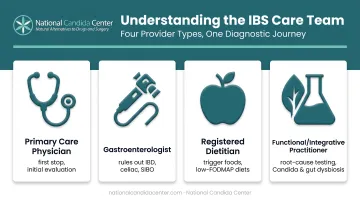
Primary Care Physician (PCP)
Your PCP is usually the first stop. They take your history, run an initial physical exam, and can often start basic management right away. If symptoms don't improve or look more complex, they'll refer you to a specialist.
Gastroenterologist
A gastroenterologist specializes in digestive diseases. They can perform procedures like colonoscopy or upper endoscopy to rule out inflammatory bowel disease, celiac disease, or small intestinal bacterial overgrowth (SIBO). These conditions mimic IBS closely enough to fool a less thorough workup.
Registered Dietitian
A registered dietitian nutritionist identifies specific trigger foods and guides structured elimination diets, such as low-FODMAP protocols. They're especially useful once IBS is confirmed and diet becomes the main lever for symptom control.
Functional or Integrative Medicine Practitioner
This type of provider digs into root causes such as Candida overgrowth, leaky gut, and gut dysbiosis, using lab testing rather than jumping straight to symptom-control medication. It's a complementary path, not a replacement for ruling out serious disease first.
Why the Right IBS Doctor Matters
IBS has no single blood test or scan that confirms it. Doctors diagnose it from a recognizable symptom pattern, combined with limited targeted testing to rule out lookalike conditions. That's why the phrase "diagnosis of exclusion" still gets used, even though current guidelines favor a positive, pattern-based diagnosis rather than endless testing for every possible condition.
The gap between symptoms and diagnosis is bigger than most people assume. According to the American College of Gastroenterology, 10% to 15% of U.S. adults experience IBS symptoms, but only 5% to 7% ever receive an actual diagnosis.
Many undiagnosed people manage symptoms on their own for years, unsure whether something more serious or more treatable is driving them. The clinician you choose closes that gap—or widens it.
A strong IBS doctor will:
- Recognize symptom patterns instead of defaulting to endless rule-outs
- Order targeted tests that exclude lookalikes without over-testing
- Look past symptom suppression toward underlying gut drivers when standard care stalls
What to Consider When Choosing the Best IBS Doctor
The right choice depends on your symptom severity, your goals (fast relief versus long-term root-cause resolution), and what hasn't worked for you already.
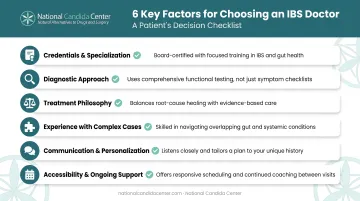
Credentials and Specialization
Verify board certification for gastroenterologists. For functional or holistic practitioners, look for relevant training in functional medicine, nutritional medicine, or gastrointestinal health. This is your first screening step. Don't skip it.
Diagnostic Approach
Ask what tests a provider typically orders: bloodwork, stool analysis, breath testing, or colonoscopy. Knowing this upfront sets realistic expectations for how long diagnosis will take and what it will involve.
Treatment Philosophy
Some providers lead with medication to manage symptoms. Others focus on diet and gut health restoration to address root causes. Neither is universally "correct." The right fit depends on what you're trying to achieve.
Experience with Complex, Overlapping Cases
If your symptoms overlap with Candida overgrowth, food sensitivities, or leaky gut, you'll want a provider who recognizes those connections rather than treating IBS as an isolated issue.
Communication and Personalization
A provider who listens closely and builds a plan around your specific history produces better long-term adherence. Cookie-cutter protocols rarely hold up against a condition this personal.
Accessibility and Ongoing Support
IBS fluctuates. Location, telehealth availability, and support between visits — not just during them — matter for a condition that doesn't stay quiet for long.
Red Flag Symptoms: When to See a Doctor Right Away
Some symptoms go beyond typical IBS and warrant urgent evaluation, not something to self-treat. According to Mayo Clinic, these include:
- Unexplained weight loss
- Rectal bleeding
- Fever
- Symptoms that wake you up at night
- Signs of anemia (fatigue, pale skin, shortness of breath)
- New onset of symptoms after age 50
None of these points to one single diagnosis. They mean a doctor should rule out other conditions—such as inflammatory bowel disease, celiac disease, or colorectal disease—that need different testing and treatment than routine IBS care.
If any of these apply to you, get evaluated promptly. Don't wait it out.
How the National Candida Center Can Help
Plenty of IBS patients leave with a prescription, some dietary advice, and a "manage your symptoms" plan. The actual driver—whether Candida yeast overgrowth, leaky gut, or broader gut dysbiosis—often never gets addressed.
The National Candida Center built its functional approach to close that gap.
Founded in 1994, the Center has spent over 30 years focused specifically on Candida overgrowth, leaky gut, and IBS through functional medicine. Its methodology starts with testing, not guesswork:
- Comprehensive stool analysis across 25+ parameters: probiotic balance, yeast cultures, pathogens, and parasites
- SIBO breath testing to assess bacterial overgrowth in the small intestine
- Lactulose/mannitol challenge testing to measure intestinal permeability
- Food-allergy antibody testing (IgA, IgG, IgE) to catch immune reactions tied to leaky gut
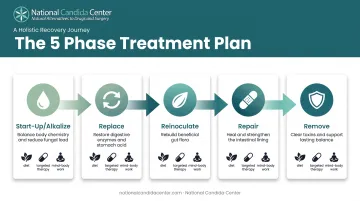
From there, patients move through a 5 Phase Treatment Plan:
- Start-Up/Alkalize
- Replace
- Reinoculate
- Repair
- Remove
That plan pairs with the Healthy Trinity Treatment Strategy: diet, targeted therapy, and mind-body work. Candisol supports the Remove phase against fungal overgrowth; Mind-Body-Biome probiotics aid reinoculation. Patients also get access to FDA-certified lab partners such as Xymogen, Metagenics, and Designs for Health.
If conventional IBS care has not brought lasting relief, this path prioritizes finding what drives symptoms—then treating that cause—rather than only quieting them.
Conclusion
There's no universally "best" IBS doctor. The right fit is the one whose expertise and philosophy match your specific symptoms, history, and goals. A gastroenterologist might be exactly what one patient needs and completely insufficient for another whose symptoms trace back to Candida overgrowth or leaky gut.
Stay alert for red-flag symptoms, and don't delay care if they show up. Whether you go conventional, functional, or both, IBS management works best with periodic reassessment and a provider committed to the long haul with you, not just the first appointment.
Frequently Asked Questions
What are the symptoms of IBS?
IBS typically involves abdominal pain or cramping, bloating, and changes in bowel habits like diarrhea, constipation, or alternating between the two. Mucus in the stool is also common.
Who is the best doctor to treat IBS?
Gastroenterologists are the primary specialists for diagnosis and for ruling out serious conditions. Functional or integrative practitioners are a strong option if you want root-cause care for issues like Candida overgrowth or leaky gut.
What treatments can an IBS doctor provide to calm symptoms quickly?
Common options include antispasmodics, fiber or laxatives, antidiarrheals, diet changes, and natural remedies such as peppermint oil. Some people feel relief within days; others need several weeks of consistent changes.
How is IBS officially diagnosed?
Doctors use the Rome IV criteria: recurring abdominal pain at least one day a week for three months, linked to changes in stool frequency or form. Other conditions are ruled out first if red flags are present.
Can IBS be cured, or only managed?
Conventional care usually manages IBS symptoms rather than curing them. Functional approaches that address root causes—such as Candida overgrowth or leaky gut—can bring longer-lasting relief when those drivers are present.
When should I see a doctor for IBS instead of managing it myself at home?
See a doctor immediately if you notice red-flag symptoms like bleeding or weight loss. Otherwise, seek evaluation if symptoms persist for three to four months despite home management.